
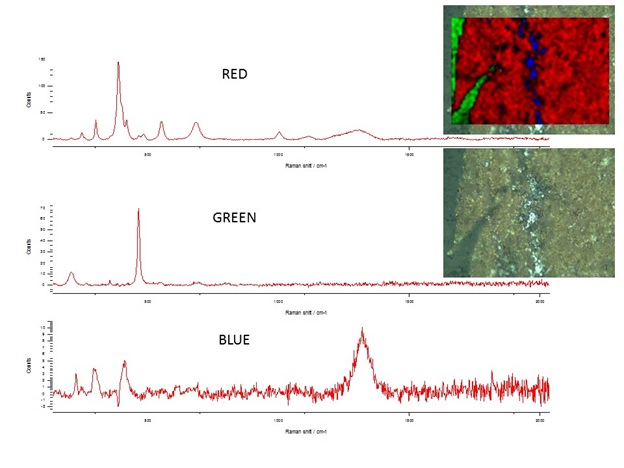
Laser Raman spectroscopy depends on a change in the polarization of a molecule to produce Raman scattering. When a beam of photons strikes a molecule, the photons are scattered elastically (Rayleigh scattering) and inelastically (Raman scattering) generating Stoke’s and anti-Stokes lines.
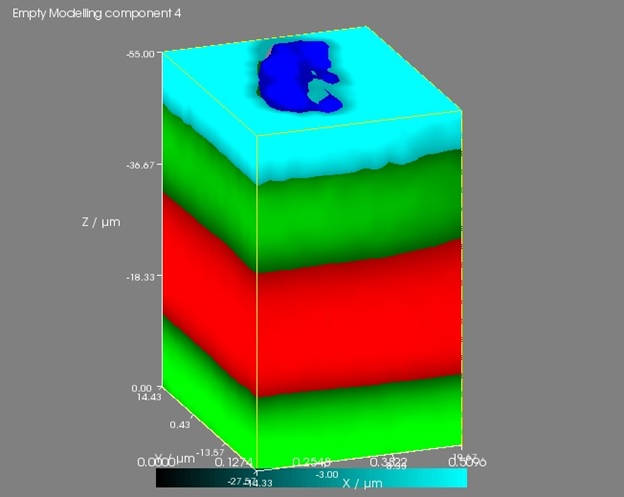
Because Raman spectroscopy is a scattering process, samples of any size or shape can be examined. Very small amounts of material can be studied down to microscopic levels (~1µm).
Instrument:
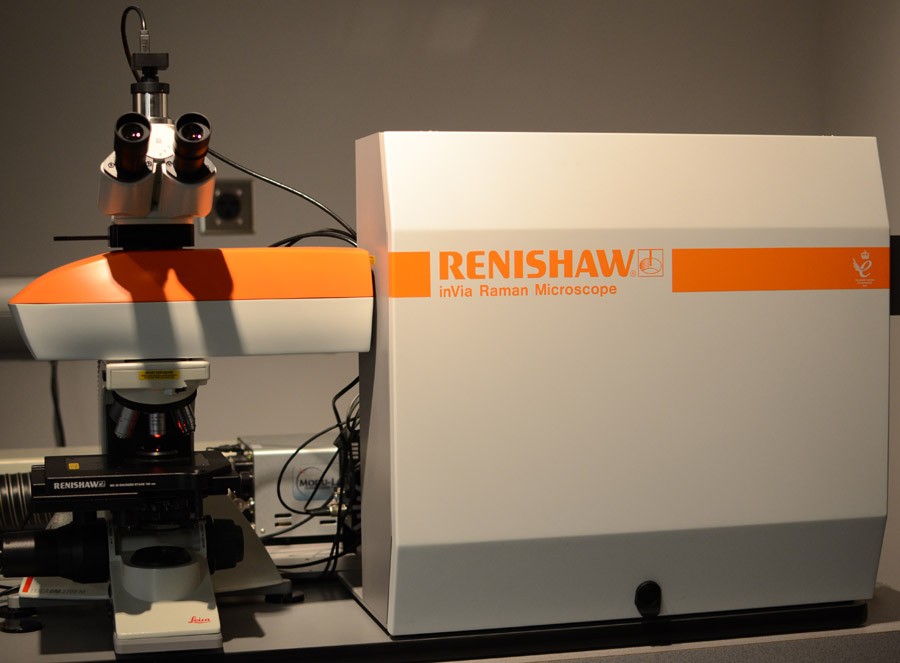
Renishaw InVia Reflex Raman Spectrometer
Three wavelengths available: 785nm, 633nm and 514nm and two gratings, 1800 and 1200 l/mm.
Also equipped with polarizer and half waveplate for each laser.
System Capabilities:
Selected Applications in industry: