UV-Vis Spectroscopy
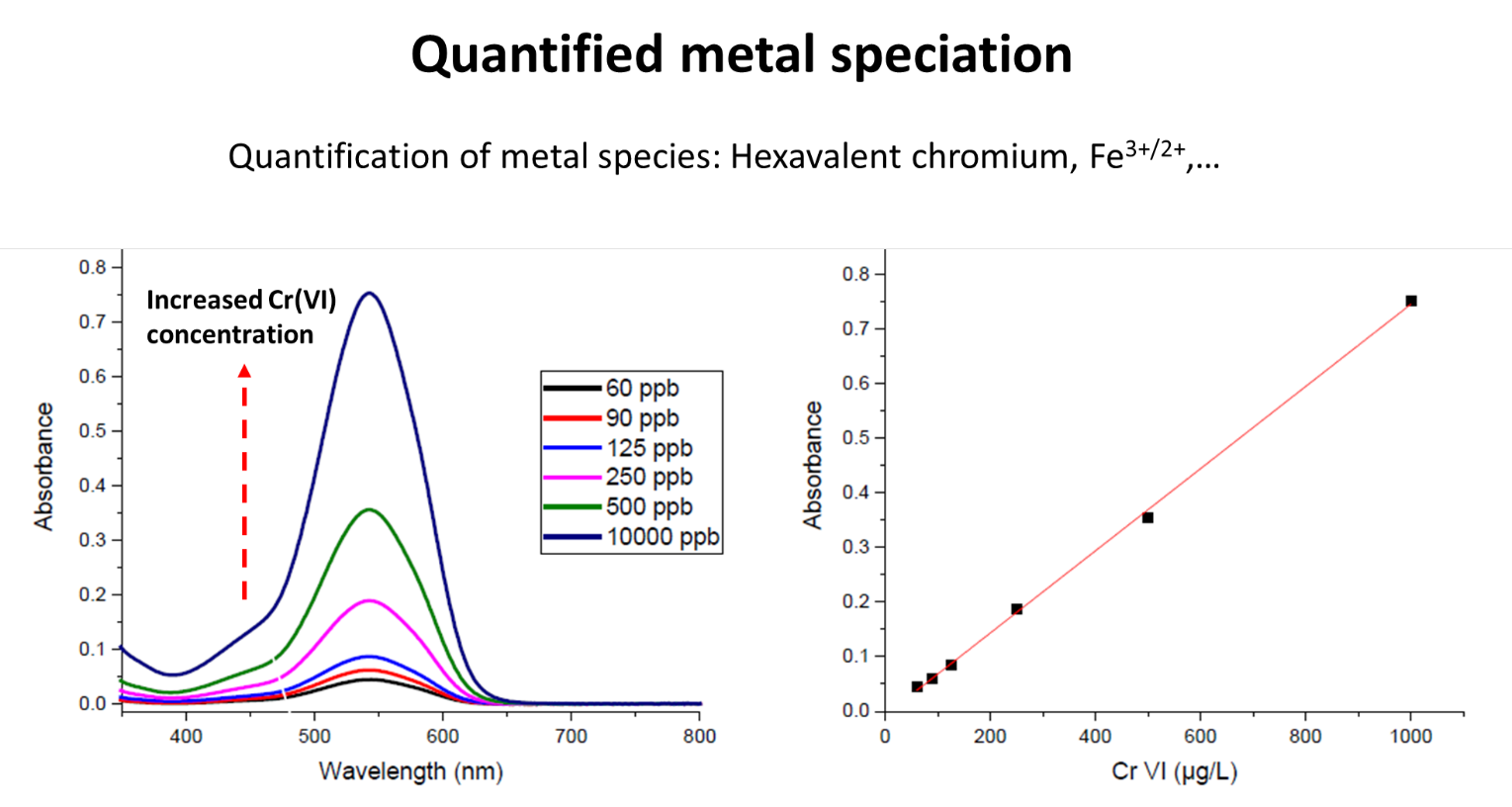
UV-Vis is an analytical technique that measures the amount of discrete wavelengths of UV or visible light that are absorbed by or transmitted through a sample. The absorbance of white light of a liquid gives information on the species in the solution, and in some cases enables quantification by using calibration standards.
Instrument:
Agilent Cary 60 UV-Vis spectrometer
System Capabilities:
- 190–1100 nm wavelength range
- Peltier element for temperature-controlled UV Vis (up to 40 ºC)

Selected applications in industry:
- Quantification of hexavalent chromium in solution. Can be performed in conjunction with investigations on leaching from consumer products and coatings.
- Quantification metal speciation, such as Fe2+ and Fe3+, molybdenum species.
- Quantification of total transition metal concentrations, for example nickel, copper, manganese, iron.
- Identification of compounds in solution (organic molecules, solvents, …)
- Characterization of certain types of noble metal nanoparticles (size, concentration)